 Flooded Basement Cleanup in Quakertown, PA: How We Helped Reduce Mold Risk After a Sump Pump Failure
A sump pump failure can leave a homeowner facing more than standing water. Wet flooring, soaked belongings, and moisture inside building materials can turn a basement cleanup into a larger restoration project.
For a Quakertown homeowner, that concern became reality when a sump pump failure flooded the basement. AfterCare Restoration’s goal was to address the water damage and reduce the conditions that could support mold growth.
During a July 2026 thunderstorm a basement sum pump was overwhelmed causing the sump pump to fail and causing the finished basement to flood.
 Why Removing the Water Is Only the Beginning
Pumping water out of a basement is an important first step, but it does not establish that the space is dry. Moisture can remain beneath flooring, behind baseboards, and inside wall assemblies.
That is why basement restoration needs to address both visible water and affected materials.
The EPA recommends drying water-damaged areas and belongings within 24–48 hours to help prevent mold growth. This is a reason to act promptly, rather than a guarantee that every property can be dried within that window. Read the EPA’s mold guidance.
For this project, the most useful measure of progress was the condition of the affected materials—not simply whether the floor looked dry.
★★★★★ 130+ Five-Star Reviews by Homeowners
📞 Call AfterCare Restoration 24/7: 215-515-1000
Veteran Owned • IICRC Certified • 1‑Hour Response • FREE Estimates
Assessing the Basement and Planning the Cleanup
A restoration assessment considers where water entered, what it contacted, and whether moisture reached adjoining or concealed areas.
The water source and potential contamination also influence the cleanup approach. A sump pump failure should not automatically be treated as a clean-water loss.
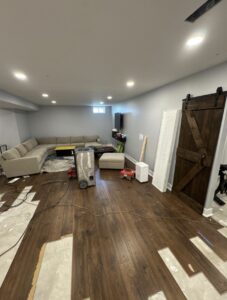
Basement had extensive water damage from sum pump failure requiring the laminate flooring to be removed, contents to be protected and a two-foot flood cut.
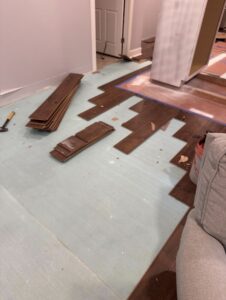
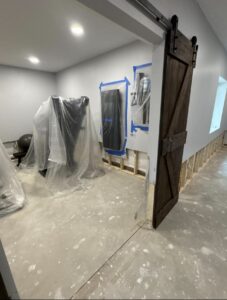
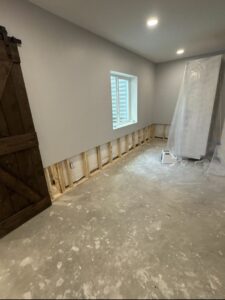
These findings establish which materials may be suitable for cleaning and drying and which may require removal. They also help the homeowner understand the proposed work before restoration proceeds.
Water Removal, Material Decisions, and Drying
Professional water damage restoration connects extraction with the work needed afterward.
Depending on the property, that may involve moving belongings, removing unsalvageable materials, cleaning affected surfaces, and positioning drying equipment. Each decision should reflect the conditions found at the site.
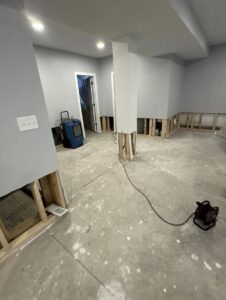
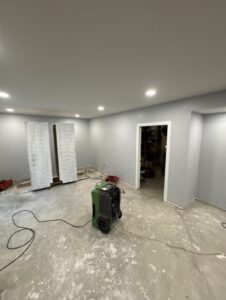
The water was extracted via commercial extractor, contents moved and protected and IICRC drying methods used to prevent mold and dry out the basement. Equipment was on site for a total of four days.
This is also where the job photos can help tell the story. An initial damage photo, a view of the work area during drying, and a completion photo can show readers what restoration involved.
How Moisture Control Helps Reduce Mold Risk
Mold prevention is primarily about controlling moisture. Extracting water, addressing wet materials, and resolving the source all contribute to that goal.
Deodorizing a room or applying a product does not replace necessary cleaning, material removal, or drying. Likewise, a dry-looking surface does not reveal the condition of everything beneath it.
If mold is already present, the project may require mold remediation in addition to water damage restoration.
A careful case study should describe the documented outcome. For example, “no visible mold was observed at the final inspection” is appropriate only if the project records support it. It does not establish that future mold growth is impossible.
Addressing the Sump Pump Problem
Restoring the basement and correcting the failed pump are connected tasks. A qualified plumber or sump pump specialist may need to evaluate the pump, power supply, float mechanism, and discharge arrangement.
Homeowners can also ask about maintenance, alarms, and backup options suited to their system. The appropriate solution depends on why the failure occurred. To learn more about sump pump failure take a look at our Bucks County Sump Pump Failure Guide
 Need Flooded Basement Cleanup in Quakertown?
AfterCare Restoration helps Quakertown homeowners navigate water removal, structural drying, and repairs with clear explanations and personal attention.
If your sump pump has failed, avoid entering standing water where electrical hazards may be present. Call 215-515-1000 for 24/7 assistance.
Visit our Quakertown restoration page to learn more about our local services. If you need basement water damage cleanup in other Bucks county locations you can learn more by visit our page here Fire & Water Damage Restoration Bucks County PA.
Water Damage Cleanup Beyond Quakertown
Dealing with a flooded basement elsewhere in Bucks County? AfterCare Restoration provides emergency water removal, structural drying, and repairs for homes and businesses throughout the area. Visit our Bucks County water damage restoration page to learn more about our services and the communities we serve.
📍 Proudly Serving Eastern Pennsylvania
- Our local team serves homes and businesses across:
- Lehigh County: Allentown, Bethlehem’s Lehigh County communities, Whitehall, Emmaus, Macungie, Trexlertown, Breinigsville, and surrounding areas.
- Bucks County: Quakertown, Doylestown, Newtown, Yardley, Warrington, Warminster, New Hope, Perkasie, and nearby communities.
- Montgomery County: Collegeville, Skippack, Lansdale, Horsham, King of Prussia, Plymouth Meeting, Harleysville, Hatfield, and surrounding areas.
- Chester County: West Chester, Phoenixville, Downingtown, Exton, Malvern, Paoli, and nearby communities.
- Delaware County: Media, Newtown Square, Radnor, Springfield, and surrounding areas.