
 Bucks County Sump Pump Failure Guide: Emergency Basement Flooding, Cleanup, Insurance & Prevention (2026 Edition)
A Complete Homeowner’s Guide for Doylestown, Newtown, Yardley, Warminster, Quakertown, New Hope, Perkasie, Warrington, and Surrounding Bucks County Communities
A sump pump is one of the most important pieces of equipment protecting your home from basement flooding. Most homeowners rarely think about it until heavy rainfall arrives, the power goes out, or water begins collecting on the basement floor.
Unfortunately, sump pump failures often happen when the equipment is needed most.
During prolonged rainfall, snowmelt, or periods of elevated groundwater, a sump pump may run repeatedly to remove water collecting around a home’s foundation. If the motor fails, the float switch becomes stuck, the discharge line freezes, or electrical power is interrupted, the sump pit can overflow.
Water may then spread across the basement floor, saturate carpeting, penetrate drywall, damage insulation, and collect beneath finished flooring.
For homeowners throughout Bucks County, Pennsylvania, understanding sump pump failures is an important part of protecting their properties.
Homes in Doylestown, Newtown, Yardley, Warminster, Quakertown, New Hope, Perkasie, and Warrington vary in age, construction, foundation design, and drainage conditions. Some have unfinished basements used for storage. Others have finished lower levels containing bedrooms, entertainment areas, offices, bathrooms, and valuable belongings.
Regardless of the property’s age or location, a sump pump failure can become a serious water damage emergency.
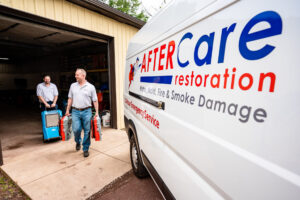 At AfterCare Restoration, we provide professional emergency basement water extraction, structural drying, moisture detection, water damage cleanup, mold remediation, and reconstruction throughout Bucks County.
This comprehensive guide explains how sump pumps work, why they fail, how to respond when a basement floods, what insurance may cover, and how to reduce the risk of future problems.
It also provides practical maintenance recommendations and local restoration resources for Bucks County homeowners.
★★★★★ 130+ Five-Star Reviews by Homeowners
📞 Call AfterCare Restoration 24/7: 215-515-1000
Veteran Owned • IICRC Certified • 1‑Hour Response • FREE Estimates
Emergency Sump Pump Failure Cleanup in Bucks County, PA
Is Your Basement Flooding Right Now?
If your sump pump has stopped working and water is entering your basement, immediate action may help reduce additional damage.
Call AfterCare Restoration 24/7 at 215-515-1000.
Our emergency restoration services include:
- Emergency basement water extraction
- Sump pump failure water damage cleanup
- Moisture detection and mapping
- Structural drying and dehumidification
- Evaluation of water-damaged building materials
- Mold remediation when necessary
- Reconstruction and repairs
- Insurance damage documentation
Important safety warning: Do not enter a flooded basement if electrical equipment, outlets, wiring, or appliances may be energized. Contact a qualified electrician or utility provider if electrical safety is uncertain.
A qualified plumber or sump pump contractor should evaluate and repair the failed pumping system. AfterCare Restoration addresses the resulting water damage.
Learn More About Our Bucks County Restoration Services
Bucks County Water & Fire Damage RestorationProfessional Water & Flood Damage Restoration
1. Why Sump Pumps Are Important for Bucks County Homes
Many Bucks County homes have basements, and some rely on sump pump systems to manage groundwater.
When rainwater enters the soil surrounding a home, some of that water moves downward through the ground. Depending on the soil, topography, foundation design, and drainage conditions, groundwater may collect around basement walls or beneath the foundation.
As water accumulates, pressure can develop against below-grade building surfaces. This is commonly referred to as hydrostatic pressure.
A foundation drainage system may help collect water and direct it toward a sump pit, where a pump removes it from the property.
Without an effective drainage system, water may enter through foundation cracks, floor-wall joints, utility penetrations, or other vulnerable locations.
Why Basements Are Particularly Vulnerable
Basements sit below the surrounding ground level. That makes them susceptible to certain types of groundwater intrusion.
A properly functioning sump pump can help manage water collected by the home’s drainage system. However, a sump pump does not eliminate every possible cause of basement flooding.
A burst plumbing pipe, sewer backup, foundation leak, or surface-water flood can occur even when the sump pump works properly.
Finished Basements Increase the Potential Damage
A finished basement can contain expensive building materials and personal property.
Common items include carpeting, luxury vinyl flooring, drywall, insulation, cabinetry, upholstered furniture, televisions, exercise equipment, and computers.
If the sump pump fails, even a few inches of water may affect multiple materials.
The damage can extend beyond the visible waterline. Moisture may travel into wall cavities, beneath flooring, and into areas that are difficult to inspect without professional equipment.
Do All Homes Need a Sump Pump?
No. Whether a home needs a sump pump depends on its drainage conditions, foundation construction, and water intrusion history.
Some properties remain dry without one. Others rely on a sump pump during wet weather.
A qualified drainage or waterproofing professional can assess the system.
2. How Does a Residential Sump Pump Work?
A sump pump is generally installed in a basin beneath the basement floor.
The basin collects water from a drainage system or surrounding groundwater. As the water level rises, a switch activates the pump.
The pump moves water through a discharge line to an appropriate exterior location. When the water level falls, the pump shuts off.
Although the process is relatively simple, several components must function correctly.
The Sump Pit
The sump pit is the collection basin. Its size and construction influence how frequently the pump activates and how much water can accumulate before overflow.
The Pump Motor
The motor drives the mechanism that moves water out of the basin. Motor failure can prevent the pump from operating.
The Float Switch
Many sump pumps use a float switch to control activation.
When water rises, the float moves upward and turns the pump on. If the float becomes stuck or damaged, the pump may not activate.
The Discharge Line
The discharge line carries water away from the basement.
A blockage, frozen section, or improper outlet can prevent effective pumping.
The Check Valve
A check valve helps prevent water in the discharge pipe from flowing backward into the sump pit.
A failed check valve may cause unnecessary cycling.
The Electrical Supply
Most primary residential sump pumps use household electricity.
A power outage can disable the pump unless an appropriate backup system is installed.
The Backup System
Some properties have a separate battery-powered or water-powered backup pump.
These systems can provide additional protection if the primary pump fails.
The High-Water Alarm
A high-water alarm warns when water rises above a normal level.
Some alarms provide audible alerts, while connected systems can send notifications to a phone.
An alarm does not remove water, but it can help homeowners discover a problem sooner.
3. Twelve Common Causes of Sump Pump Failure
Understanding why sump pumps fail can help homeowners identify warning signs and arrange preventive maintenance.
1. Electrical Power Outages
Storms can interrupt electrical service.
Unfortunately, the same storm that causes a power outage may also create heavy groundwater inflow.
Without electricity, a standard sump pump cannot operate.
A properly maintained backup system can reduce this vulnerability.
2. Float Switch Failure
A stuck or damaged float switch may prevent the pump from activating.
In some cases, the float may become obstructed by the side of the pit or nearby equipment.
3. Motor Failure
Sump pump motors can wear out over time.
A pump that runs frequently may experience greater mechanical wear than one that operates occasionally.
4. Clogged Pump Intake
Debris or sediment may obstruct the pump intake.
This can reduce pumping efficiency or stop water movement.
5. Blocked Discharge Pipe
A clogged discharge line can prevent water from leaving the basement.
Possible causes include debris, sediment, damaged piping, or an obstructed outlet.
6. Frozen Discharge Line
During freezing weather, water remaining in an exposed discharge line may freeze.
The resulting ice blockage can cause the sump pit to overflow.
7. Incorrect Pump Capacity
A pump that cannot handle the incoming water volume may run continuously without lowering the water level.
Pump selection should account for flow rate, discharge height, and piping resistance.
8. Excessive Cycling
A pump that switches on and off repeatedly may experience additional wear.
Frequent cycling can result from check valve problems, a small basin, or switch settings.
9. Failed Check Valve
A damaged check valve may allow discharged water to return to the pit.
This can increase cycling and reduce pumping efficiency.
10. Aging Equipment
Sump pumps have a limited service life.
Actual longevity varies with installation quality, operating conditions, maintenance, and usage.
11. Improper Installation
Incorrect pump positioning, float placement, discharge routing, or electrical connections can cause problems.
12. Lack of Maintenance
A sump pump that is never inspected or tested may fail without warning.
Routine testing is especially important before periods of heavy rain.
4. Warning Signs Your Sump Pump May Be Failing
Many homeowners discover sump pump problems only after water enters the basement.
However, certain warning signs may indicate the system needs attention.
Unusual Noises
Grinding, rattling, or other unfamiliar sounds may indicate mechanical problems.
Continuous Running
A sump pump that never shuts off may be dealing with unusually high groundwater inflow, a faulty switch, or inadequate pumping capacity.
Frequent Cycling
Repeated short cycles can place additional stress on the equipment.
Water Remaining in the Pit
If the water level remains high while the pump should be operating, the system may not be functioning properly.
Visible Rust or Corrosion
Corrosion may indicate deteriorating components or connections.
Excessive Vibration
Unusual vibration can indicate mechanical wear or debris.
Tripped Circuit Breakers
Repeated breaker trips may indicate an electrical or mechanical problem.
Do not repeatedly reset a breaker without identifying the cause.
High-Water Alarm Activation
A high-water alarm indicates that the system requires attention.
Musty Basement Odors
Musty odors do not prove a sump pump has failed, but they may indicate persistent moisture problems.
Failure During Testing
If the pump does not activate during an appropriate test, contact a qualified contractor.
Homeowner recommendation: Do not wait for a major storm to investigate unusual sump pump operation.
5. What Happens When a Sump Pump Fails During Heavy Rain?
Heavy rainfall can increase groundwater levels around a foundation.
As water enters the sump pit, the pump normally removes it through the discharge system.
If the pump stops working, the water level can continue rising. Eventually, the pit may overflow.
Stage One: Water Accumulates
The sump pit fills because the pump is not operating or cannot discharge water effectively.
Stage Two: Water Reaches the Basement Floor
Once the basin overflows, water may spread across the surrounding floor.
Stage Three: Water Moves Into Finished Areas
Water can travel across flooring and enter carpeting, wall assemblies, storage areas, and finished rooms.
Stage Four: Materials Absorb Moisture
Drywall, wood, insulation, carpeting, and other porous materials may absorb water.
Stage Five: Concealed Moisture Develops
Water can become trapped beneath flooring or behind baseboards.
Stage Six: Secondary Damage Becomes Possible
Materials may swell, deteriorate, or develop conditions that support mold growth.
Why a Small Amount of Water Can Cause Significant Damage
Homeowners sometimes assume that one inch of water is a minor problem.
But the depth of standing water is only one factor.
The type of flooring, exposure time, water contamination, and affected wall materials may be more important than the visible water level.
A finished basement with one inch of water can require extensive drying or material removal.
6. What to Do Immediately When Your Sump Pump Fails
When water enters your basement, the first priority is safety.
Step 1: Avoid Electrical Hazards
Do not enter standing water if electrical equipment or wiring may be energized.
Never attempt to operate an electrical panel while standing in water.
If safety is uncertain, contact a qualified electrician or utility provider.
Step 2: Do Not Reach Into a Flooded Sump Pit
A sump pit may contain energized electrical equipment.
Do not attempt to repair or reposition the pump while the area is unsafe.
Step 3: Contact a Qualified Pump Contractor
A plumber or sump pump specialist can determine why the system failed.
The issue may involve the motor, float switch, power supply, discharge line, or another component.
Step 4: Document the Damage
When safe, photograph the water level, affected materials, and damaged belongings.
Documentation may be useful for insurance purposes.
Step 5: Contact AfterCare Restoration
If water has entered your basement, arrange for emergency water extraction and moisture assessment.
AfterCare Restoration: 215-515-1000
Step 6: Protect Unaffected Belongings
If conditions are safe, move dry belongings away from the water.
Do not handle wet electrical equipment or attempt to lift heavy furniture in unsafe conditions.
Step 7: Notify Your Insurance Company
Report the damage promptly and ask about applicable coverage.
Step 8: Keep Records
Save photographs, receipts, contractor invoices, and relevant communications.
Step 9: Address the Source of the Water
The sump pump system must be repaired or replaced as appropriate.
Step 10: Address the Water Damage
Repairing the pump does not automatically dry affected building materials.
Professional restoration may still be necessary.
7. Why Visible Water Removal Is Not Enough
A basement can appear dry while significant moisture remains in the structure.
This is one of the most important facts homeowners should understand after sump pump failure.
Water Beneath Flooring
Moisture may migrate beneath luxury vinyl, laminate, hardwood, and other flooring systems.
Saturated Carpet Padding
Carpet padding can retain water even when the carpet surface feels relatively dry.
Wet Drywall
Drywall can absorb water through its paper facing and gypsum core.
Damp Insulation
Insulation behind finished walls may become saturated.
Moisture in Wood Framing
Wood framing can retain moisture after visible water is removed.
Wet Cabinet Materials
Composite cabinet components may swell or deteriorate.
Concrete Moisture
Concrete is porous and can retain moisture.
Why Professional Moisture Detection Matters
Restoration professionals use moisture measurement tools to evaluate affected building materials.
The goal is to identify where water traveled and determine appropriate drying or removal methods.
AfterCare Restoration provides moisture detection, structural drying, and professional dehumidification throughout Bucks County.
8. How Professional Sump Pump Failure Cleanup Works
Professional restoration involves more than pumping water out of a basement.
The process must address the water source, affected materials, moisture conditions, and any contamination.
Step 1: Emergency Assessment
The restoration team evaluates the extent of the water intrusion.
This includes identifying affected rooms, building materials, and potential safety concerns.
Step 2: Confirm the Water Source Is Controlled
The failed pump or drainage problem must be addressed.
A qualified plumber or sump pump contractor may be necessary.
Step 3: Evaluate Water Contamination
Groundwater entering a basement may contain soil, microorganisms, or other contaminants.
It should not automatically be considered clean water.
Step 4: Extract Standing Water
Professional extraction equipment removes accessible standing water.
Prompt extraction helps reduce continued exposure of building materials.
Step 5: Map Moisture
Technicians evaluate affected flooring, drywall, insulation, framing, and other materials.
Step 6: Determine Material Restoration
Some materials can be dried and restored.
Others may require removal because of contamination, deterioration, or inability to dry appropriately.
Step 7: Establish Structural Drying
Professional drying equipment may include air movers and commercial dehumidifiers.
The equipment configuration depends on the conditions and materials involved.
Step 8: Monitor Drying Progress
Moisture readings help determine whether materials are approaching appropriate drying goals.
Step 9: Complete Necessary Cleaning
Cleaning methods depend on the water source, contamination, and affected materials.
Step 10: Complete Reconstruction
Once mitigation is complete, damaged drywall, flooring, insulation, cabinetry, or other finishes may need replacement.
AfterCare Restoration offers reconstruction services to help restore the property.
Learn More About Our Water Damage Restoration Services
 9. How Long Does It Take to Dry a Basement After Sump Pump Failure?
There is no single drying timeline for every basement flood.
The duration depends on the amount of water, the materials affected, contamination, temperature, humidity, and how long the basement remained wet.
Unfinished Basements
Unfinished basements may contain exposed concrete and fewer absorbent finishes.
However, water can still affect framing, insulation, mechanical equipment, and stored belongings.
Finished Basements
Finished basements often contain more moisture-sensitive materials.
Carpeting, drywall, insulation, and flooring assemblies may require additional assessment.
Water Beneath Flooring
Trapped moisture can extend the drying process.
Wet Wall Cavities
Water entering wall assemblies may require selective removal of materials or specialized drying methods.
Environmental Conditions
Temperature, humidity, ventilation, and continuing water intrusion influence drying.
Why Drying Equipment Must Be Monitored
Professional drying should be based on moisture measurements and material conditions rather than a predetermined number of days.
Can You Stay in Your Home During Restoration?
Sometimes homeowners can remain in unaffected areas.
Occupancy depends on electrical safety, contamination, structural conditions, access, and other factors.
10. How Much Does Sump Pump Failure Cleanup Cost in Bucks County?
The cost of restoration depends on the size and complexity of the water loss.
A small amount of water affecting an unfinished basement may require much less work than flooding that damages an entire finished lower level.
Amount of Water
Larger water losses may require more extraction equipment and labor.
Basement Size
A larger affected area can increase the restoration scope.
Water Contamination
Groundwater contamination may require additional cleaning and material removal.
Flooring Materials
Carpet, hardwood, laminate, vinyl, and concrete respond differently to moisture.
Wall Damage
Wet drywall and insulation may require drying, removal, or replacement.
Furniture and Contents
Handling damaged belongings may add to the project.
Drying Equipment
Equipment needs depend on the extent of moisture and environmental conditions.
Reconstruction
Replacement of damaged materials can represent a substantial part of the total cost.
Why Online Estimates Are Often Misleading
National averages combine many different types of water damage.
A professional assessment is the best basis for determining the appropriate work and estimating costs.
AfterCare Restoration provides restoration assessments and estimates throughout Bucks County.
Call 215-515-1000 for assistance.
11. Does Homeowners Insurance Cover Sump Pump Failure in Pennsylvania?
Insurance coverage is one of the most important financial considerations following basement flooding.
A standard homeowners policy may exclude water that overflows from a sump system or backs up through drains unless additional coverage applies.
Many insurers offer optional water backup or sump overflow endorsements.
Coverage varies by insurer and policy.
What Is Water Backup Coverage?
Water backup coverage may protect against certain losses involving water backing up through drains or overflowing from sump systems.
The exact protection depends on the endorsement wording.
Is Sump Pump Failure Automatically Covered?
No.
Homeowners should review their policies rather than assuming coverage exists.
What About a Power Outage?
Coverage may depend on the policy language and cause of the loss.
Will Insurance Replace the Failed Pump?
The failed pump and resulting water damage may be treated differently.
Ask your insurer about both.
What About Groundwater Flooding?
Groundwater intrusion and surface flooding may be subject to different policy exclusions.
A sump overflow endorsement does not necessarily cover every form of basement flooding.
Is Flood Insurance the Same as Water Backup Coverage?
No.
Flood insurance and water backup endorsements generally address different risks.
How Much Coverage Is Appropriate?
The appropriate amount depends on the property’s potential exposure.
A finished basement with flooring, drywall, cabinetry, electronics, and furniture may have a much larger potential loss than an unfinished basement.
What Should You Document?
Keep photographs, damaged-property inventories, repair invoices, mitigation records, and restoration estimates.
Can AfterCare Restoration Help With Documentation?
Yes.
AfterCare Restoration can provide restoration estimates and documentation to assist with communication with insurance adjusters.
The insurance company determines coverage and payment under the policy.
Recommendation: Ask your insurance agent to review your sump overflow and water backup coverage before the next major storm.
12. Why Battery Backup Sump Pumps Are Worth Considering
Many sump pump failures occur during power outages.
A backup system can provide additional protection when the primary pump cannot operate.
How Battery Backup Systems Work
A separate battery-powered pump activates when water rises above a designated level or the primary pump cannot keep up.
Protection During Power Outages
A battery backup can continue operating when household electricity is unavailable, subject to battery capacity.
Protection From Primary Pump Failure
A separate backup pump may provide protection when the primary motor or switch fails.
Battery Runtime
Runtime depends on battery capacity, condition, pump demand, and incoming water volume.
Battery systems do not provide unlimited operation.
Maintenance Requirements
Batteries require inspection, testing, and eventual replacement.
High-Water Alarms
An alarm can warn homeowners when the water level rises unexpectedly.
Remote Monitoring
Some systems can send smartphone notifications about high water, battery condition, or pump operation.
Professional Installation
A qualified sump pump contractor can recommend the appropriate backup configuration.
13. Water-Powered Backup Sump Pumps
Some homeowners consider water-powered backup sump pumps as an alternative to battery systems.
These systems use municipal water pressure to operate a pumping mechanism.
Potential Advantage
A properly installed water-powered system may operate during an electrical outage without relying on a battery.
Important Limitations
These systems require suitable municipal water pressure and may not work for homes supplied by private wells.
They also consume municipal water during operation.
Backflow Protection
Proper backflow prevention is essential.
Local Plumbing Requirements
Installation must comply with applicable plumbing requirements.
Choosing a Backup System
Battery-powered and water-powered systems have different advantages and limitations.
A qualified plumber can help determine which option is appropriate for the property.
14. How to Test Your Sump Pump Before Heavy Rain
Regular testing can help identify problems before the basement floods.
Follow the manufacturer’s instructions and do not perform maintenance in unsafe wet or electrical conditions.
Inspect the Area
Look for visible debris, damaged piping, or obvious problems.
Check the Power Supply
Verify that the system is connected to an appropriate electrical source.
Perform the Recommended Water Test
Many sump pumps can be tested by carefully adding clean water to the basin until the float activates.
Testing procedures vary by system.
Observe Pump Operation
The pump should activate, move water through the discharge line, and shut off appropriately.
Check the Discharge Outlet
Verify that water reaches the intended exterior discharge location when safe to inspect.
Listen for Unusual Sounds
Grinding or excessive vibration may indicate a problem.
Test the Alarm
Follow the manufacturer’s instructions.
Test the Backup System
Verify that the backup system operates as intended.
Arrange Service if Necessary
If the pump does not activate, cycles excessively, or fails to remove water, contact a qualified contractor.
15. Sump Pump Maintenance Checklist for Bucks County Homeowners
Preventive maintenance is one of the most practical ways to reduce the likelihood of sump pump failure.
Before Spring Rain
Test the pump and backup system. Inspect the discharge outlet and check the high-water alarm.
During Summer
Monitor unusual cycling, inspect accessible drainage components, and check basement humidity.
Before Fall Storms
Test the primary pump, review backup battery condition, and clean gutters and downspouts.
Before Winter
Inspect exposed discharge lines, address vulnerable piping, and check the backup system.
After Heavy Rain
Inspect the basement for moisture, listen for unusual pump operation, and check whether the system is cycling normally.
Annually
Review equipment age and service history. Arrange professional maintenance when appropriate.
Confirm that household members understand what to do if the basement floods.
Keep Maintenance Records
Record installation dates, service visits, repairs, and battery replacements.
These records can help identify aging equipment and recurring problems.
16. Frozen Sump Pump Discharge Lines in Bucks County
A sump pump may operate normally but fail to remove water because its discharge line is blocked by ice.
This can occur during freezing weather when water remains inside exposed piping.
Why Discharge Lines Freeze
Water trapped in vulnerable sections can freeze when temperatures fall.
Why Winter Thaws Create Problems
Snowmelt can increase groundwater inflow while portions of the discharge system remain frozen.
Warning Signs
A pump may run continuously while the pit remains full. Water may back up into the basin.
Prevention
Have the discharge line evaluated for proper routing, drainage, and freeze protection.
Avoid Dangerous Thawing Methods
Never use open flames or unsafe heating equipment.
Professional Assistance
A qualified sump pump contractor can determine why the line is freezing and recommend corrections.
For more information about winter plumbing emergencies, read our Bucks County Burst Pipe and Frozen Pipe Guide.
Add the published guide link here.
17. Basement Drainage Problems That a Sump Pump Cannot Fix
A sump pump is only one part of basement water management.
Repeated flooding may indicate broader drainage problems.
Clogged Gutters
Roof runoff can spill near the foundation when gutters are blocked.
Short Downspouts
Downspouts that release water close to the foundation may contribute to water accumulation.
Improper Grading
Ground that slopes toward a house may direct surface water toward the foundation.
Foundation Cracks
Cracks and openings may allow water intrusion.
Window Wells
Poorly drained window wells can collect water.
Failed Foundation Drainage
Drainage systems can become obstructed or deteriorate.
Surface Flooding
Water flowing across the property may enter through doors, windows, or other openings.
Repeated Pump Overload
A pump that frequently struggles may be undersized or receiving more water than the system was designed to handle.
Important: Replacing a sump pump does not automatically correct poor drainage design.
A qualified drainage or waterproofing professional should evaluate recurring problems.
18. Sump Pump Failure vs. Sewer Backup
Not all basement water damage has the same source.
A sump pump failure may allow groundwater to overflow from the collection pit.
A sewer backup involves wastewater entering through drains or plumbing fixtures.
Groundwater Intrusion
Groundwater may contain soil, microorganisms, chemicals, and other contaminants.
It should not automatically be treated as clean water.
Sewer Backup
Sewage may contain harmful microorganisms and requires additional cleanup precautions.
Warning Signs of Sewer Backup
Water emerging from floor drains, toilets, or other plumbing fixtures may indicate a sewer or drain problem.
Why the Difference Matters
The water source influences cleaning methods, material restoration decisions, safety precautions, and insurance considerations.
Do Not Enter Contaminated Water
Avoid direct contact with suspected sewage or contaminated floodwater.
AfterCare Restoration Sewage Cleanup
AfterCare Restoration provides professional sewage-related cleanup services throughout Bucks County.
Learn More About Sewage Cleanup Services
19. Can Sump Pump Failure Cause Mold?
Yes.
A failed sump pump can introduce water into materials that support mold growth.
Under favorable conditions, mold may begin developing within approximately 24–48 hours.
Not every water loss results in mold, but prompt moisture control is important.
Common Basement Mold Locations
Mold may develop on:
- Drywall paper
- Wood framing
- Carpet backing
- Stored cardboard
- Certain insulation materials
- Furniture
- Other damp organic materials
Why Hidden Moisture Matters
Water may remain beneath flooring or behind walls after standing water has been removed.
Warning Signs
Potential indicators include visible discoloration, persistent musty odors, and a history of unresolved moisture.
Can Household Fans Prevent Mold?
Fans may help with small, uncomplicated moisture problems.
Significant water intrusion may require professional drying.
Do not direct strong airflow across visible or suspected mold contamination.
When Is Mold Remediation Necessary?
A professional assessment can help determine the appropriate response when visible mold or significant contamination is present.
AfterCare Restoration Mold Services
AfterCare Restoration provides professional mold remediation throughout Bucks County.
Professional Mold Remediation ServicesRead our Bucks County Mold Remediation Guide (2026 Edition) for additional information about mold warning signs, remediation, moisture control, and prevention.
Add the published guide link here.
20. Finished Basement Flooding After Sump Pump Failure
Finished basements can suffer substantial damage from sump pump overflow.
Carpet and Padding
Carpet padding may absorb water quickly.
Luxury Vinyl Flooring
Water can become trapped beneath planks even when the surface appears resistant to moisture.
Laminate Flooring
Many laminate materials are vulnerable to swelling and deterioration.
Drywall
Water can enter drywall from the bottom and spread upward.
Insulation
Wet insulation may require removal depending on contamination and material conditions.
Home Offices
Computers, paperwork, desks, and furniture may be damaged.
Entertainment Areas
Electronics, cabinetry, and upholstered furniture may be affected.
Basement Bedrooms
Mattresses, flooring, and personal belongings may require evaluation.
Storage Areas
Cardboard boxes, books, photographs, and stored furniture may be difficult to restore after prolonged exposure.
Reconstruction
AfterCare Restoration provides reconstruction services following water damage mitigation.
21. Unfinished Basement Flooding: Why It Still Matters
Homeowners sometimes assume an unfinished basement can simply be allowed to dry on its own.
That may be inappropriate after significant water intrusion.
Concrete Floors
Concrete is porous and can retain moisture.
Wood Framing
Exposed framing can absorb water.
Mechanical Equipment
Water heaters, furnaces, and other equipment may be damaged.
Electrical Systems
Standing water near electrical equipment creates safety concerns.
Stored Belongings
Furniture, clothing, documents, and cardboard boxes may become saturated.
Elevated Humidity
Standing water can increase indoor humidity and affect surrounding materials.
Mold Risk
Moisture-sensitive materials may support mold growth even without finished walls.
Professional Assessment
A large water loss may require extraction, cleaning, and structural drying regardless of whether the basement is finished.
22. Sump Pump Failure Cleanup in Doylestown, PA
Doylestown Borough and Doylestown Township contain historic homes, established neighborhoods, and newer residential developments.
Basements vary considerably in age, design, and finishing materials.
Some properties have exposed foundation walls and unfinished storage areas. Others have renovated lower levels with carpeting, drywall, flooring, and living spaces.
When a sump pump fails, water may enter these materials and migrate into concealed areas.
Homeowners should inspect their sump systems before major storms and consider backup protection where appropriate.
AfterCare Restoration provides emergency basement water extraction, sump pump failure cleanup, moisture detection, structural drying, and water damage reconstruction throughout Doylestown.
Water Damage Restoration in Doylestown, PA
23. Sump Pump Failure Cleanup in Newtown, PA
Newtown Borough and Newtown Township contain historic residences, established neighborhoods, townhomes, and newer developments.
Some properties have finished basements used as entertainment rooms, home offices, or additional living space.
A failed sump pump can allow water to spread beneath flooring and into walls.
Even when standing water is removed, moisture may remain trapped inside building materials.
Homeowners should understand their drainage systems and test sump pumps before periods of heavy rainfall.
AfterCare Restoration provides professional emergency water extraction, moisture assessment, structural drying, and reconstruction throughout Newtown.
Water Damage Restoration in Newtown, PA
24. Sump Pump Failure Cleanup in Yardley, PA
Yardley and surrounding Lower Makefield communities contain residential properties with a variety of foundation and drainage conditions.
Properties near waterways or lower-lying areas may have additional water-management concerns, although actual flood risk varies by address.
A sump pump can help manage certain types of groundwater intrusion, but it cannot prevent every form of flooding.
When a sump pump fails, water may affect finished basements, storage areas, drywall, flooring, and personal belongings.
AfterCare Restoration provides emergency basement water removal, structural drying, and reconstruction throughout Yardley.
Water Damage Restoration in Yardley, PA
25. Sump Pump Failure Cleanup in Warminster, PA
Warminster contains established residential neighborhoods, suburban developments, and commercial properties.
Finished basements can experience substantial damage when sump pumps fail during heavy rainfall.
Common problems may include power outages, float switch failures, blocked discharge lines, and aging equipment.
Homeowners should test their sump pumps and inspect backup systems before major storms.
AfterCare Restoration provides 24/7 emergency basement flood cleanup, moisture detection, structural drying, and reconstruction throughout Warminster.
Water Damage Restoration in Warminster, PA
26. Sump Pump Failure Cleanup in Quakertown, PA
Quakertown and surrounding Upper Bucks County communities contain older homes, established neighborhoods, and newer residential developments.
Foundation and drainage conditions vary from property to property.
Sump pump maintenance is particularly important when groundwater inflow increases during wet weather.
Winter freeze-thaw conditions may also create problems for vulnerable discharge lines.
AfterCare Restoration provides emergency water extraction, moisture assessment, structural drying, and reconstruction throughout Quakertown.
Water Damage Restoration in Quakertown, PA
27. Sump Pump Failure Cleanup in New Hope, PA
New Hope contains historic homes, established residential properties, and newer construction.
Basement water intrusion may affect original building materials, finished living spaces, and stored belongings.
Properties near the Delaware River may face flood-related considerations that differ from ordinary sump pump overflow.
Homeowners should understand the limitations of their sump systems and review their insurance coverage.
AfterCare Restoration provides emergency basement water removal, moisture detection, structural drying, and reconstruction throughout New Hope.
Water Damage Restoration in New Hope, PA
28. Sump Pump Failure Cleanup in Perkasie, PA
Perkasie contains established borough neighborhoods and surrounding residential developments.
Some homes use sump pumps to manage groundwater entering basement drainage systems.
When a pump fails, water can damage flooring, drywall, furniture, and mechanical areas.
Regular testing, discharge-line maintenance, and backup protection can help reduce the likelihood of unexpected flooding.
AfterCare Restoration provides emergency basement flood cleanup and water damage restoration throughout Perkasie.
Water Damage Restoration in Perkasie, PA
29. Sump Pump Failure Cleanup in Warrington, PA
Warrington contains established neighborhoods, suburban developments, and commercial properties.
Many finished basements include home offices, recreation rooms, bedrooms, and storage areas.
When a sump pump overflows, water may spread into flooring systems and concealed wall cavities.
Homeowners should test their sump pumps regularly and consider high-water alarms and backup systems.
AfterCare Restoration provides 24/7 emergency water extraction, moisture detection, structural drying, and reconstruction throughout Warrington.
Water Damage Restoration in Warrington, PA
30. Protecting Your Basement During Heavy Rain
Heavy rainfall is one of the most important times to verify that your sump pump system is functioning.
Before the Storm
Test the primary pump, check the backup system, inspect the discharge outlet, verify the high-water alarm, and clear accessible drainage areas.
Check gutters and downspouts.
During the Storm
Monitor pump operation when safe, pay attention to warning alarms, and avoid flooded electrical areas.
If the Power Goes Out
Check whether the backup system is operating.
Do not use unsafe electrical connections.
Contact a qualified contractor if the system cannot remove water.
After the Storm
Inspect the basement for moisture, investigate unusual pump sounds, and check for damp walls, flooring, or musty odors.
When to Call AfterCare Restoration
If water has entered your basement and affected building materials, contact our team for emergency restoration assistance.
Call 215-515-1000.
31. Commercial Sump Pump Failure in Bucks County
Sump pump failures can also affect commercial buildings.
Offices, retail properties, restaurants, apartment buildings, and other facilities may contain basement drainage systems.
Equipment Damage
Flooding can affect mechanical equipment, electrical systems, and stored inventory.
Business Interruption
Water damage may restrict access to workspaces and interrupt operations.
Property Management Responsibilities
Building managers should maintain inspection and service records for critical pumping equipment.
Backup Protection
Commercial systems may require additional redundancy, monitoring, or capacity.
Emergency Restoration
AfterCare Restoration provides commercial water damage restoration throughout Bucks County.
Our services include emergency extraction, moisture assessment, structural drying, cleaning, and reconstruction.
32. Why Repeated Sump Pump Failures Should Be Investigated
If a sump pump repeatedly fails, the problem may extend beyond the pump itself.
Inadequate Capacity
The pump may not be capable of handling the incoming water.
Improper Discharge Routing
Discharged water may be returning toward the foundation.
Check Valve Problems
Backflow may increase pumping frequency.
Electrical Issues
Unreliable power connections or recurring breaker trips may affect operation.
Poor Drainage Design
The system may be receiving more water than it was designed to handle.
Aging Equipment
The pump may be reaching the end of its useful service life.
Persistent Groundwater Pressure
Some properties experience significant groundwater inflow during wet conditions.
Professional System Evaluation
A qualified contractor should evaluate the complete system rather than simply replacing equipment repeatedly.
33. Frequently Asked Questions About Sump Pump Failure in Bucks County, PA
1. What is the most common reason a sump pump fails?
Common causes include power outages, float switch problems, motor failure, clogged discharge lines, and inadequate maintenance.
2. What should I do if my sump pump stops working?
Avoid electrical hazards, contact a qualified pump contractor, and arrange water damage restoration if the basement has flooded.
3. Does homeowners insurance cover sump pump failure?
Coverage often depends on whether the policy includes a water backup or sump overflow endorsement.
4. How much does sump pump failure cleanup cost?
Costs depend on the amount of water, affected materials, contamination, drying requirements, and reconstruction needs.
5. How long does it take to dry a flooded basement?
Drying time varies. Professional moisture measurements help determine when appropriate drying goals have been achieved.
6. Can sump pump failure cause mold?
Yes. Moisture remaining in susceptible materials can support mold growth.
7. How often should I test my sump pump?
Follow the manufacturer’s recommendations and test before major wet-weather periods.
8. Do I need a battery backup sump pump?
A backup system can provide additional protection during power outages or primary pump failures.
9. How long does a sump pump last?
Service life varies with equipment quality, installation, maintenance, and usage.
10. Why does my sump pump run constantly?
Possible causes include high groundwater inflow, inadequate capacity, switch problems, or discharge restrictions.
11. Why does my sump pump turn on every few minutes?
Frequent cycling may result from check valve problems, a small sump pit, switch settings, or high water inflow.
12. Can sump pump discharge pipes freeze?
Yes. Water remaining in exposed piping can freeze and block discharge.
13. Is water from a sump pump failure considered clean water?
Not necessarily. Groundwater can contain soil, microorganisms, chemicals, and other contaminants.
14. Does a sump pump prevent every type of basement flooding?
No. It cannot prevent every plumbing leak, sewer backup, surface flood, or drainage failure.
15. Can I use a shop vacuum to remove basement water?
Small, uncomplicated water losses may sometimes be manageable with properly rated equipment under safe conditions. Significant or contaminated flooding requires additional precautions.
16. Should wet basement drywall be removed?
Sometimes. The decision depends on contamination, damage, saturation, and restoration feasibility.
17. Is a battery backup enough for a long power outage?
Not always. Runtime depends on battery capacity, condition, and pumping demand.
18. Can I stay in my home after basement flooding?
That depends on electrical safety, contamination, structural conditions, and whether unaffected living areas remain safe.
19. Should I replace my sump pump before it fails?
Proactive replacement may be appropriate for aging, unreliable, or heavily used equipment. A qualified contractor can advise.
20. Who provides 24/7 sump pump failure cleanup in Bucks County?
AfterCare Restoration provides emergency basement water extraction, moisture detection, structural drying, and reconstruction throughout Bucks County.
Call 215-515-1000.
34. Related Bucks County Restoration Guides
Sump pump failure is one of several causes of basement flooding.
Homeowners may also experience burst pipes, sewer backups, groundwater intrusion, appliance leaks, and moisture-related mold problems.
AfterCare Restoration provides educational resources to help homeowners understand these risks.
Bucks County Water & Fire Damage Restoration
Our main county page explains our emergency restoration services and communities served.
Bucks County Water & Fire Damage Restoration
Bucks County Basement Flooding Guide
Our comprehensive basement flooding guide covers groundwater intrusion, plumbing failures, emergency water removal, insurance considerations, and prevention.
Bucks County Basement Flooding Guide: What Homeowners Need to Know (2026 Edition)
Bucks County Burst Pipe & Frozen Pipe Guide
A burst water supply pipe can flood a basement even when the sump pump is working properly.
Our burst pipe guide explains frozen pipe prevention, emergency cleanup, insurance, structural drying, and water damage restoration.
Add the published Bucks County Burst Pipe & Frozen Pipe Guide URL here.
Bucks County Mold Remediation Guide
Basement flooding can create moisture conditions that support mold growth.
Our mold remediation guide covers warning signs, professional remediation, moisture control, and prevention.
Add the published Bucks County Mold Remediation Guide URL here.
Professional Water Damage Restoration
Water & Flood Damage Restoration Services
Professional Mold Remediation
Professional Sewage Cleanup
Emergency Restoration Questions
35. Why Choose AfterCare Restoration for Sump Pump Failure Cleanup?
When a basement floods, homeowners need more than a company that removes standing water.
They need professionals who can evaluate moisture damage, explain the restoration process, and help return the property to its pre-loss condition.
Local Restoration Professionals
AfterCare Restoration serves Bucks County and surrounding Eastern Pennsylvania communities.
24/7 Emergency Service
Basement flooding can happen at any time.
AfterCare Restoration provides emergency assistance day and night.
Professional Water Extraction
We remove accessible standing water using professional extraction equipment.
Moisture Detection
We evaluate moisture that may have entered flooring, walls, insulation, and other materials.
Structural Drying
Professional dehumidification and drying equipment help address affected building materials.
Mold Remediation
When mold contamination is present, our team can provide appropriate remediation services.
Reconstruction
AfterCare Restoration offers repairs and reconstruction following water damage mitigation.
Insurance Documentation
We provide restoration estimates and documentation to support communication with insurance adjusters.
Our Core Values
Honesty. Hard Work. Professionalism. Compassion. Communication. Responsibility.
We believe homeowners deserve clear communication, professional workmanship, and compassionate service during difficult property emergencies.
36. Protect Your Bucks County Home Before the Next Sump Pump Emergency
A sump pump may be one of the least noticeable pieces of equipment in your home, but its failure can cause substantial damage.
The best protection begins before heavy rainfall.
Test the primary pump, inspect the discharge system, maintain backup equipment, and investigate unusual operation.
Keep gutters and downspouts functioning properly.
Understand the limitations of your drainage system and review your insurance coverage.
If your basement has already flooded, prioritize safety and contact the appropriate professionals.
Remember that repairing the sump pump does not automatically remove moisture from flooring, drywall, insulation, and other building materials.
Professional water extraction and structural drying may be necessary.
24/7 Emergency Sump Pump Failure Cleanup in Bucks County, PA
AfterCare Restoration provides emergency basement water extraction, sump pump failure cleanup, flooded basement cleanup, moisture detection, structural drying, dehumidification, mold remediation, reconstruction, and insurance restoration documentation.
We proudly serve Doylestown, Newtown, Yardley, Warminster, Quakertown, New Hope, Perkasie, Warrington, and surrounding Bucks County communities.
Call AfterCare Restoration 24/7 at 215-515-1000.
Learn More About AfterCare Restoration in Bucks County, PA
AfterCare Restoration — Local. Trusted. Veteran Owned.
Helping Bucks County homeowners and businesses recover from sump pump failures, basement flooding, water damage, and unexpected property emergencies.
Additional Homeowner Resources
- U.S. Environmental Protection Agency — Flooded Home Cleanup
- U.S. Environmental Protection Agency — A Brief Guide to Mold, Moisture and Your Home
This guide provides general educational information. Electrical safety, plumbing repairs, drainage design, and insurance coverage should be evaluated by appropriately qualified professionals.