 Chester County Water Damage Restoration: What Homeowners Should Do First
Finding water spreading across a floor or dripping through a ceiling can leave you wondering what to do first. Whether the problem begins with a broken pipe, an appliance leak, or a flooded basement, your priorities are protecting your family, stopping the source when safe, and getting the damage assessed.
AfterCare Restoration provides 24/7 water damage restoration in Chester County, PA, serving West Chester, Phoenixville, Exton, Downingtown, Malvern, and Paoli. As a local, family- and veteran-owned IICRC Certified Firm, we help homeowners understand the cleanup process and move forward with a clear plan.
Here is what to know about emergency water removal, structural drying, and repairs.
Learn More About Water Damage Restoration in Chester County PA
Why FAST Water Damage Restoration Matters
★★★★★ 130+ Five-Star Reviews by Homeowners
📞 Call AfterCare Restoration 24/7: 215-515-1000
Veteran Owned • IICRC Certified • 1‑Hour Response • FREE Estimates
What to Do When You Discover Water Damage
Before entering an affected room, consider whether water has reached electrical equipment, whether ceilings are sagging, or whether sewage may be involved.
Take these initial steps:
- Keep people and pets away from unsafe areas. Do not enter standing water near electrical hazards.
- Stop the source if safely accessible. For a plumbing leak, this may mean closing the main water supply valve.
- Avoid walking beneath sagging ceilings.
- Photograph visible damage from a safe location.
- Contact an emergency water damage restoration team.
Do not use a household vacuum to collect water or enter a flooded basement to reach a breaker panel. If there is an immediate danger to life or safety, leave the property and contact emergency services.
Common Causes of Water Damage in Chester County Homes
Water damage can result from a sudden equipment failure or a slow leak that goes unnoticed. Possible sources include:
- Broken or frozen water supply pipes.
- Washing machine hoses and dishwasher connections.
- Water heater failures.
- Sump pump malfunctions.
- Roof leaks during storms.
- Sewage backups.
- Water entering through foundation openings.
The source affects how the property should be cleaned. A supply-line leak requires a different assessment than sewage or outdoor floodwater.
Even water that initially appears clean can contact contaminated materials as it spreads. Tell your restoration team what happened and how long the water may have been present.
 Why Emergency Water Removal Is Only the First Step
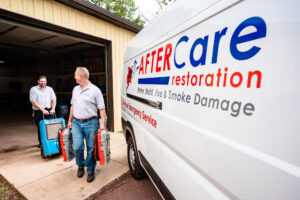
Removing standing water is essential, but visible puddles do not reveal the full extent of a loss.
Water can move beneath flooring, soak insulation, and enter wall cavities. A surface may feel dry while moisture remains in the layers below it.
Professional emergency water removal should therefore be followed by an assessment of affected materials and a suitable drying plan. The goal is to identify where moisture remains and monitor progress before repairs conceal those areas again.
Simply opening windows or placing household fans in a room may not adequately address moisture inside building assemblies.
What Professional Water Damage Restoration Includes
1. Inspection and Moisture Assessment
The restoration team evaluates the source, affected rooms, and condition of building materials. Moisture meters help identify damp areas that are not obvious during a visual inspection.
Thermal imaging may help locate temperature patterns that warrant further investigation. Moisture readings are then used to confirm suspected wet materials.
2. Water Extraction
Extraction equipment removes standing water and accessible moisture. This reduces the amount of water that drying equipment must subsequently remove.
The appropriate approach depends on the surfaces involved, accessibility, and contamination.
3. Material Evaluation
Some materials can be dried and restored. Others may require removal because of contamination, physical damage, or an inability to dry effectively.
Your restoration team should explain those recommendations rather than treating every wet material the same way.
4. Structural Drying
Commercial air movers and dehumidifiers are positioned according to the drying plan. Equipment needs vary with the affected space, materials, and environmental conditions.
Moisture levels are monitored throughout the process. Equipment placement and drying methods may change as conditions improve or additional affected areas are identified.
5. Cleaning and Reconstruction
After appropriate cleaning and drying, repairs may include drywall, insulation, trim, flooring, and painting.
AfterCare Restoration provides both mitigation and reconstruction services, helping connect the initial damage assessment with the repairs that follow.
 Burst Pipe Repair and Water Damage Cleanup
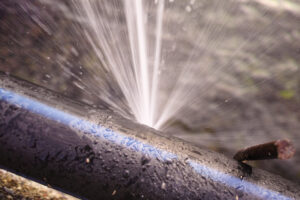
A broken pipe creates two related needs: repairing the plumbing and restoring the resulting property damage.
Burst pipe repair should be performed by a qualified plumbing professional. Water extraction and structural drying address moisture that has already entered the building.
For example, fixing a leaking pipe above a ceiling does not dry the insulation or framing around it. The affected area still needs evaluation.
When requesting help, explain whether the water has been shut off and whether a plumber has addressed the source. This information helps coordinate the next steps.
Basement Flood Cleanup in Chester County
A basement flood can affect finished rooms, stored belongings, mechanical equipment, and structural materials.
If you are searching for “flood cleanup near me,” look for a company that assesses the source, contamination, and hidden moisture—not just the standing water.
A sump pump failure may also require equipment repairs. Outside water intrusion may call for a separate drainage or foundation evaluation. Restoration addresses the damage, while correcting the underlying problem helps reduce the risk of another incident.
Avoid using household fans in areas affected by sewage or outdoor floodwater. The cleanup team should determine when air movement is appropriate.
Serving West Chester and Nearby Communities
AfterCare Restoration assists homeowners throughout these key Chester County communities:
- West Chester: Water damage cleanup, structural drying, and repairs following plumbing leaks, appliance failures, and other losses.
- Phoenixville: Basement water removal and restoration of affected rooms and belongings.
- Exton: Emergency cleanup and drying for residential and commercial properties.
- Downingtown: Assessment and restoration following water intrusion and plumbing-related damage.
- Malvern: Water extraction, material evaluation, and reconstruction.
- Paoli: Emergency mitigation and guidance throughout cleanup and repairs.
The appropriate restoration plan depends on the property’s condition, rather than its location alone. When you call, provide your address and a description of the problem so our team can discuss availability and response timing.
Choosing Water Damage Restoration Near Me
When searching for “water damage restoration near me,” ask how the company evaluates hidden moisture, documents drying, and communicates about repairs.
Useful questions include:
- Will you explain which materials can be restored?
- How will moisture levels be monitored?
- Who will provide project updates?
- Can you handle reconstruction after drying?
- What documentation will I receive?
AfterCare Restoration brings more than 30 years of contractor experience and over 15 years of restoration expertise. We explain the recommended work, answer questions, and keep you informed as your project progresses.
We can also document affected areas and communicate with your insurance adjuster about the restoration scope. Your insurer determines coverage and payment under your policy.
Get Help With Water Damage in Chester County
You do not need to know the full extent of the damage before requesting assistance. A professional assessment can help establish what is affected, what needs immediate attention, and how restoration should proceed.
Call AfterCare Restoration at 215-515-1000 for 24/7 emergency water damage assistance in West Chester, Phoenixville, Exton, Downingtown, Malvern, Paoli, and surrounding Chester County communities.
Our team will listen to your concerns, explain the next steps, and help you move forward with confidence.
★★★★★ 130+ Five-Star Reviews by Homeowners
📞 Call AfterCare Restoration 24/7: 215-515-1000
Veteran Owned • IICRC Certified • 1‑Hour Response • FREE Estimates
Emergency Restoration Service Areas in Eastern Pennsylvania
AfterCare Restoration helps homeowners and businesses recover from water, fire, smoke, mold, sewage, and storm damage throughout Eastern Pennsylvania. Our local, veteran-owned team provides emergency cleanup, professional drying, and reconstruction with clear communication from the initial assessment through repairs.
Which counties do you serve?
Explore your county’s service page for more information about restoration services and the communities we serve:
- Bucks County: Serving communities including Quakertown, Doylestown, Newtown, Yardley, New Hope, Warrington, and Warminster.
- Montgomery County: Serving communities including Horsham, Lansdale, Hatfield, Collegeville, Skippack, Harleysville, King of Prussia, and Plymouth Meeting.
- Lehigh Valley County PA: Serving communities including Allentown, Trexlertown, Breinigsville, Coopersburg, Center Valley, and Macungie.
- Northampton County: Serving Bethlehem, Easton, and surrounding communities.
- Chester County: Serving communities including West Chester, Phoenixville, Malvern, Exton, and Downingtown.
- Delaware County: Serving communities including Media, Newtown Square, Radnor, and Wayne.