 Fire Damage Restoration Process: A Guide for Eastern PA Homeowners
A house fire leaves more than burned materials behind. Smoke can travel into rooms untouched by flames, soot can settle on belongings, and firefighting water can soak walls and flooring. Restoring the property requires a coordinated plan that addresses each type of damage.
For homeowners in Phoenixville, West Chester, Pottstown, Allentown, Chalfton and Hatfield, PA, understanding the fire damage restoration process helps make an overwhelming situation more manageable. Here is what to expect, from the initial inspection through the final walkthrough.
1. Safety, Inspection, and Damage Assessment
Restoration begins once emergency officials allow access. Never enter a damaged home or reconnect utilities until the appropriate professionals confirm it is safe.
The restoration team evaluates fire, smoke, soot, and water damage throughout the property. This includes accessible structural components, interior finishes, belongings, and potential smoke pathways through attics, wall cavities, and heating and cooling systems.
Photographs, measurements, and written observations establish the initial scope of work. Structural concerns may require an engineer, while electrical and mechanical systems require qualified tradespeople.
In older homes, suspected asbestos-containing materials or lead-based paint may require assessment before demolition. The restoration plan should reflect the building’s materials, condition, and applicable requirements.
Click Here To Learn More:
- Fire Damage Restoration Timeline
- Fire & Smoke Damage Cleanup
- 5 Types Of Fire Damage
- What To Know About Fire Damage Restoration
 2. Emergency Mitigation and Property Protection
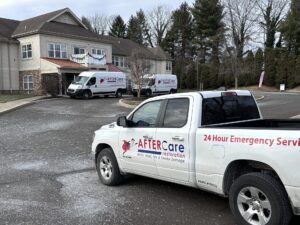
Mitigation means preventing additional damage. Depending on conditions, crews may board up broken windows, secure exterior openings, and install temporary roof protection.
Water extraction and controlled drying may begin promptly when firefighting efforts have left materials wet. Technicians use moisture measurements to identify affected areas and monitor drying rather than relying on how surfaces look or feel.
Work areas may also need containment and appropriate air filtration to limit the spread of contamination during cleanup.
Homeowners should receive an explanation of immediate priorities, authorized work, and anticipated next steps. Emergency stabilization and the longer reconstruction phase should have clearly defined scopes.
3. Contents Inventory and Restoration
Furniture, clothing, photographs, and household possessions need individual assessment. Some items can be cleaned onsite; others may require a documented pack-out for specialized treatment and storage.
A contents inventory should identify items, their condition, and their destination. This helps homeowners track belongings and supports communication with the insurance adjuster.
Cleaning methods depend on the material and damage. Washable fabrics, finished wood, electronics, and delicate keepsakes require different approaches. Heat-damaged electronics should be evaluated before use.
Not everything can be restored. The team should explain recommendations for cleaning or replacement and document items before disposal, coordinating with the homeowner and insurer as appropriate.
 4. Soot Cleaning and Smoke Odor Removal
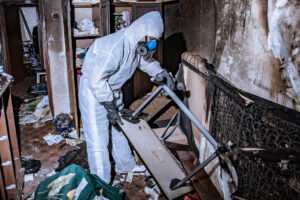
Smoke damage cleanup requires more than wiping visible stains. Residues vary according to what burned and how the fire developed. Using an unsuitable cleaning method can smear soot or damage finishes.
Professionals assess affected surfaces and test cleaning methods before proceeding. Treatment may involve specialized dry cleaning, HEPA-filtered vacuuming, or appropriate wet cleaning.
Odor management starts with locating and removing affected materials and cleaning salvageable surfaces. Painting over residue or adding fragrance does not address the underlying contamination.
Heating and cooling systems also need assessment when smoke may have entered them. Additional deodorization treatments are selected for the conditions and used with appropriate controls. The ANSI/IICRC S700 standard addresses assessment, restoration cleaning, and odor management for fire-affected buildings and contents.
5. Structural Repair and Reconstruction
After damaged materials are removed and necessary cleaning and drying are completed, reconstruction restores the building.
Work may include framing repairs, roofing, electrical wiring, plumbing, HVAC components, insulation, drywall, cabinetry, flooring, and painting. The exact sequence depends on the approved scope and required inspections.
For an older property in Phoenixville or West Chester, preserving existing trim or matching finishes may require additional planning. A home in Pottstown, Allentown, or Hatfield may present different repair needs depending on its construction and damage.
Permit requirements and inspections should be confirmed with the municipality responsible for the property. Materials should not be enclosed before required checks and drying verification are complete.
6. Final Verification and Walkthrough
Before project closeout, the team reviews completed repairs, cleaning results, outstanding odors, and any remaining punch list items with the homeowner.
Restored belongings can return when the property is ready. Homeowners should also receive relevant project documentation, care instructions, and information about completed inspections.
The absence of a smoke smell alone does not establish that every restoration or safety requirement has been met. Completion should reflect the agreed scope and applicable professional evaluations.
 How Long Does Fire Restoration Take?
Timing depends on damage severity, contents processing, material availability, permits, and reconstruction needs. Limited damage may require a substantially shorter schedule than a fire involving major structural repairs.
Ask for a written timeline with milestones and regular updates.
Fire Damage Restoration Across Eastern PA
AfterCare Restoration provides fire damage restoration and reconstruction for Eastern Pennsylvania homeowners. For help in Phoenixville, West Chester, Pottstown, Allentown, or Hatfield, call 215-515-1000 to discuss your property and next steps.
📞 Call AfterCare Restoration 24/7 – 215.515.1000
Veteran Owned • IICRC Certified • 1‑Hour Response
AfterCare Restoration proudly provides fast, reliable water and fire damage restoration throughout the Lehigh Valley and surrounding communities. Our team responds 24/7 to homes and businesses across the region, offering certified cleanup, drying, and emergency services wherever you need us.
- Allentown, PA
- Ambler, PA
- Audubon, PA
- Bethlehem PA
- Blue Bell, PA
- Center Valley, PA
- Collegeville, PA
- Chalfton, PA
- Coopersburg, PA
- Doylestown, PA
- East Greenville, PA
- Fort Washington, PA
- Harleysville, PA
- Hatfield, PA
- King Of Prussia, PA
- Lansdale, PA
- Leola, PA
- Macungie, PA
- New Holland, PA
- New Hope, PA
- Newtown, PA
- Newtown Square, PA
- North Wales, PA
- Oaks, PA
- Pennsburg, PA
- Perkasie, PA
- Phoenixville, PA
- Plymouth Meeting, PA
- Red Hill, PA
- Quakertown, PA
- Schwenksville, PA
- Shillington, PA
- Skippack, PA
- Souderton, PA
- Telford, PA
- Warminster, PA
- Wayne, PA
- Willow Grove, PA
- West Chester, PA