 How Long Does Fire and Smoke Odor Last Without Professional Cleaning?
After a house fire, one question often remains long after the flames are extinguished: when will the smoke smell disappear?
There is no reliable expiration date for fire-related smoke odor. It can persist for weeks, months, or longer when affected materials remain untreated. A smell that temporarily fades can also return because the source was never removed.
For homeowners in West Chester, King of Prussia, Allentown, Easton, Bethlehem, Pottstown, and Bensalem, PA, understanding why odors linger can help prevent incomplete cleanup and unnecessary repairs.
Click Here To Learn More:
- Fire Damage Restoration Timeline
- Fire & Smoke Damage Cleanup
- 5 Types Of Fire Damage
- What To Know About Fire Damage Restoration
Fire Damage Restoration Services Portfolio:
Fire Damage Restoration Services Portfolio
 Why Smoke Odor Does Not Simply Disappear
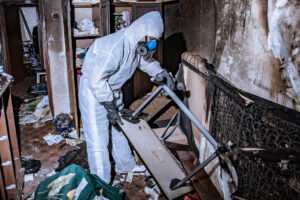
Smoke carries particles and gases that can spread beyond the room where a fire started. Residues settle on surfaces, while odor-producing compounds can be retained by furnishings and building materials.
Carpet, upholstery, insulation, unfinished wood, and other porous materials can hold contamination that ordinary surface cleaning misses. Smoke may also reach closets, attics, wall cavities, and heating and cooling systems.
Opening windows may reduce airborne odors temporarily, but it does not remove residues embedded in materials. The American Red Cross notes that smoke odors and soot are difficult to remove and may be best handled by professional fire restorers.
What Determines How Long the Smell Lasts?
The duration depends on the circumstances, rather than a universal timeline.
What burned: Food, wood, plastics, and synthetic furnishings produce different residues and odors. Cleaning methods must account for those differences.
The extent of exposure: A brief, contained incident differs from a fire that sends smoke throughout the building.
Affected materials: Washable surfaces may be easier to restore than deeply affected insulation, carpet padding, or upholstered furniture.
Hidden contamination: Residues behind cabinets or above ceilings may continue producing odors after accessible surfaces are cleaned.
Environmental conditions: Changes in temperature and humidity can influence odor release and perception. A room that seems acceptable one day may smell smoky again later.
Does a Fading Smell Mean the House Is Clean?
Not necessarily. Ventilation can dilute airborne contaminants without addressing their source. People may also become accustomed to an odor and notice it less over time.
Conversely, detecting an odor does not tell you the concentration or precise health significance of every substance present. Smell alone cannot establish whether a property is safe to occupy.
After a significant fire, follow directions from emergency officials and qualified professionals about reentry, utilities, and restoration. If smoke exposure causes symptoms, leave the affected area and seek appropriate medical advice.
Why Common Household Remedies Fall Short
Air fresheners and scented candles may cover an odor without removing the materials causing it. Bowls of vinegar or baking soda cannot reliably treat contamination throughout a fire-affected building.
Painting over soot is another shortcut that can leave the underlying problem unresolved. Surfaces need appropriate assessment and cleaning before decisions about sealing or refinishing.
Be cautious about renting an ozone generator for occupied spaces. The EPA explains that ozone can harm the lungs and is generally ineffective at removing many indoor contaminants at concentrations within public health standards. Odor treatment should never substitute for source removal.
How Professional Smoke Odor Removal Works
Effective restoration begins with identifying the boundaries of smoke impact and developing a plan for the building and its contents.
The process may include:
- Inspection and documentation: Evaluate visible residues, odor patterns, affected materials, and possible hidden pathways.
- Source removal: Remove debris and materials that cannot be adequately restored.
- Surface cleaning: Select and test methods appropriate for each residue and surface.
- Contents restoration: Assess furniture, clothing, keepsakes, and other belongings for cleaning or replacement.
- System assessment: Evaluate potentially affected HVAC components before returning them to normal operation.
- Odor treatment and verification: Apply appropriate treatments and review results before completing repairs.
The ANSI/IICRC S700 standard addresses assessment, restoration cleaning, and fire odor management for buildings and contents. Treatment should match the loss rather than rely on one machine or product.
 What Eastern Pennsylvania Homeowners Should Consider
Whether the property is an older home in West Chester or Bethlehem, an attached residence in Easton or Allentown, or a house in King of Prussia, Pottstown, or Bensalem, construction details influence the inspection.
For example, concealed cavities, multiple flooring layers, and connected spaces may complicate identifying affected materials. The relevant issue is how your particular building allowed smoke to travel.
Tell the restoration team where odors are strongest and whether they change when doors close or mechanical systems operate. Those observations can help guide further investigation.
Get Help With Persistent Smoke Odor
Do not assume lingering smoke odor will resolve on its own. An assessment can identify overlooked sources and clarify which cleaning or repair steps are appropriate.
AfterCare Restoration provides fire and smoke damage restoration in Eastern Pennsylvania. Call 215-515-1000 to discuss your property, persistent odors, and next steps toward recovery.
📍 Proudly Serving Eastern Pennsylvania
-
- Bucks County
- Chester County
- Delaware County
- Lehigh County
- Montgomery County
- Northampton CountyOur local team serves homes and businesses across:
We know Pennsylvania homes, building materials, and insurance processes — and we respond fast because we’re right here in your community.
 📞 Call AfterCare Restoration 24/7: 215-515-1000
Veteran Owned • IICRC Certified • 1‑Hour Response • FREE Estimates
AfterCare Restoration proudly provides fast, reliable water and fire damage restoration throughout West Chester and surrounding communities. Our team responds 24/7 to homes and businesses across the region, offering certified cleanup, drying, and emergency services wherever you need us.
- Allentown, PA
- Ambler, PA
- Audubon, PA
- Bethlehem PA
- Blue Bell, PA
- Center Valley, PA
- Collegeville, PA
- Chalfton, PA
- Coopersburg, PA
- Doylestown, PA
- East Greenville, PA
- Fort Washington, PA
- Harleysville, PA
- Hatfield, PA
- King Of Prussia, PA
- Lansdale, PA
- Leola, PA
- Macungie, PA
- New Holland, PA
- New Hope, PA
- Newtown, PA
- Newtown Square, PA
- North Wales, PA
- Oaks, PA
- Pennsburg, PA
- Perkasie, PA
- Phoenixville, PA
- Plymouth Meeting, PA
- Red Hill, PA
- Quakertown, PA
- Schwenksville, PA
- Shillington, PA
- Skippack, PA
- Souderton, PA
- Telford, PA
- Warminster, PA
- Wayne, PA
- Willow Grove, PA
- West Chester, PA