 Smoke Damage Without Flames: Does Your Home Need Professional Cleanup After a Small Fire?
A kitchen fire is extinguished before it spreads. The cabinets nearby show damage, but the living room looks unchanged. Hours later, you notice a smoky smell upstairs.
Does the rest of the house need professional cleanup?
Possibly. A fire can remain confined to one area while smoke and soot affect other rooms. The extent of cleanup depends on what burned, how smoke traveled, and which materials were exposed.
For homeowners in Doylestown, Lansdale, and Quakertown, PA, understanding that difference can help prevent premature painting, unnecessary replacement, and overlooked damage. Here is what to consider after a small residential fire.
Click Below To Learn More About Fire Damage
How Long Does Fire & Smoke Odor Last?
Fire Damage Restoration Process
How Can Smoke Damage Rooms Where Nothing Burned?
Flames do not need to reach a room for smoke residue to affect it. Smoke can move through doorways, stairwells, and other openings, depositing residue as it travels. Heating and cooling systems may also require assessment if smoke entered their components.
The resulting damage may look different throughout the home. One room might have obvious soot, while another has a lingering odor or a faint film on surfaces.
The size of the burned area alone does not establish the cleanup scope. A professional assessment considers the path of smoke and the materials it contacted, rather than stopping at the room where the fire began.
Signs Your Home May Need Smoke Damage Cleanup
After authorities permit access, document what you can observe without disturbing affected materials. Signs worth discussing with a restoration professional include:
- Persistent smoke odors beyond the room where the fire occurred.
- Dark residue or unusual discoloration on walls and ceilings.
- A film on furniture, shelving, or other surfaces.
- Smoke odors in clothing, curtains, carpeting, or upholstered furniture.
- Visible residue around vents or nearby surfaces.
- Odors that remain after ordinary ventilation.
These observations do not establish the full extent of damage. Likewise, a room that looks clean is not automatically unaffected.
Avoid judging conditions solely by smell. Odor is one clue, but it does not independently determine whether a space is suitable for occupancy.
 What Should You Do Immediately After a Small Fire?
First, follow the fire department’s instructions. Do not reenter until officials allow access, and do not reconnect utilities or use damaged appliances without appropriate clearance.
The U.S. Fire Administration’s after-fire guidance explains that hazards can remain after the flames are extinguished.
Once immediate safety needs are addressed:
- Contact your insurance company to report the loss.
- Photograph accessible damage from a safe location.
- Limit unnecessary handling of soot-covered belongings.
- Arrange an assessment before extensive cleaning or repairs.
- Keep notes about affected rooms, belongings, and conversations.
- Call an Emergency Restoration Company like AfterCare Restoraton.
If there is an active fire, suspected rekindling, or another immediate danger, leave the property and call 911.
Why Opening Windows May Not Solve the Problem
Ventilation may reduce airborne odors, but it does not remove residue already deposited on surfaces or absorbed into affected materials.
That is why a home can smell better temporarily while still needing cleaning. Air fresheners and scented products also do not address the source.
Effective odor treatment starts with identifying affected materials and determining what can be cleaned, treated, or replaced. The American Red Cross notes that smoke odors and soot can be difficult to remove and that professional fire restorers may be best equipped for the work.
What Should You Avoid Cleaning Yourself?
Before scrubbing soot-covered walls, washing upholstered furniture, or repainting, have the residue and surface evaluated. A method suited to one material may damage another or spread residue.
Avoid assuming that every fire requires the same cleaning product. What burned, the surface finish, and the condition of the material all influence the approach.
Painting over affected surfaces without addressing residue can also leave the underlying problem unresolved.
Electronics, valuable artwork, delicate fabrics, and sentimental belongings may need specialized assessment. Tell your restoration team which items matter most before deciding what to discard.
What Happens During a Professional Smoke Damage Assessment?
A useful assessment should produce a clear explanation of the affected areas and recommended next steps.
At AfterCare Restoration, the evaluation may include:
- Inspecting the fire area and adjoining rooms.
- Examining surfaces and belongings for smoke and soot exposure.
- Considering concealed areas where access is warranted.
- Evaluating whether HVAC components need further attention.
- Checking for water damage from firefighting.
- Documenting findings and discussing the proposed scope.
Not every property needs extensive demolition or whole-house treatment. Recommendations should reflect observed conditions, with additional investigation explained when necessary.
 What Can Be Cleaned, and What Needs Replacement?
Many belongings and building materials may be restorable, but there is no universal answer.
Decisions depend on the material, residue, exposure, physical damage, and whether effective cleaning is practical. Some hard surfaces may respond to appropriate cleaning, while heavily affected porous materials may require replacement.
Contents may need packing, transport, cleaning, and storage while restoration proceeds.
Ask your contractor to distinguish between items that are clearly damaged, items suitable for restoration, and items requiring further evaluation. You should understand the reasoning before approving replacement or disposal.
How Long Does Smoke Damage Restoration Take?
A contained loss may require a shorter cleanup than a fire affecting multiple rooms, contents, and concealed spaces. Drying, specialized contents work, material availability, and reconstruction can extend the schedule.
Rather than relying on a fixed promise, ask for a staged plan: assessment, cleanup, drying where needed, odor treatment, and repairs. Your team should explain what is known and update you as the scope becomes clearer.
 Fire and Smoke Damage Help in Eastern Pennsylvania
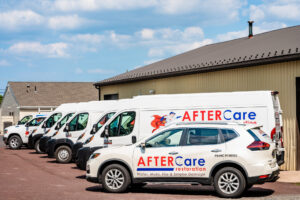
AfterCare Restoration provides fire and smoke damage restoration in Doylestown, Lansdale, Quakertown, and surrounding Bucks and Montgomery County communities.
We are a local, family- and veteran-owned IICRC Certified Firm with more than 30 years of contracting experience and 15+ years of restoration expertise. Our services include emergency board-up, cleanup, contents restoration, structural drying, and reconstruction.
If your home still smells smoky after a small fire, call 215-515-1000. Our team is available 24/7 to discuss your concerns, assess restoration needs, and explain the next steps.
★★★★★ 130+ Five-Star Reviews by Homeowners
When water or fire damage disrupts your home or business, you need a restoration company that responds fast, communicates clearly, and delivers results you can trust. AfterCare Restoration is a local, veteran‑owned, IICRC Certified Firm serving Eastern Pennsylvania with industry‑leading expertise and a commitment to doing the job right the first time.
📍 Proudly Serving Eastern Pennsylvania
- Our local team serves homes and businesses across:
- Bucks County PA
- Chester County
- Delaware County
- Lehigh Valley County PA
- Montgomery County PA
- Northampton County
We know Pennsylvania homes, building materials, and insurance processes — and we respond fast because we’re right here in your community.