 Basement Water Damage in Lansdale, PA: Why Removing the Water Isn’t Enough
When water enters your basement, getting it out is usually your first priority. Whether the cause is a failed sump pump, a plumbing leak, or heavy rain, standing water can quickly disrupt your home and damage belongings.
But once the puddles disappear, an important question remains: Are the affected building materials actually dry?
For homeowners in Lansdale, PA, water removal is only one part of recovery. Moisture can remain beneath flooring, behind drywall, and inside other materials long after the basement looks better. Understanding what happens next can help you make informed decisions about cleanup, structural drying, and repairs.
Learn More About Water Damage in Lansdale PA & Montgomery County below:
Water & Fire Damage Restoration Lansdale PA
Water Damage Restoration Montgomery County PA
Water & Flood Damage Restoration Services
The Water Is Gone. Is Your Basement Really Dry?
A basement floor may look dry while nearby materials still hold moisture. Water can travel under finished flooring, soak into wood framing, and enter wall cavities through gaps along the floor.
Carpet padding, insulation, and the bottom edges of drywall may also remain wet after visible water has been extracted.
This matters because rebuilding over damp materials can lead to continuing damage, odors, and conditions that support mold growth. Painting a stain or replacing trim does not resolve moisture hidden behind the surface.
Professional basement water damage cleanup involves evaluating both the visible damage and the areas where water may have traveled.
Where Moisture Can Hide After a Basement Flood
Finished basements often contain several layers of materials. That makes it difficult to judge the full extent of water damage by appearance alone.
Common places that warrant inspection include:
- Behind baseboards and drywall: Water can enter along the bottom of walls and affect concealed materials.
- Under carpet and padding: The carpet surface may feel better before the padding or subfloor has dried.
- Beneath laminate or other flooring: Water may become trapped between flooring layers.
- Inside insulation: Wet insulation may be difficult to dry effectively without access or removal.
- Around cabinets and built-ins: Enclosed spaces can restrict airflow and conceal water damage.
- Inside adjoining rooms: Water does not always stop at the doorway of the visibly affected area.
Inspection should follow the water’s path rather than focus only on the deepest puddle.
 Why Household Fans May Not Be Enough
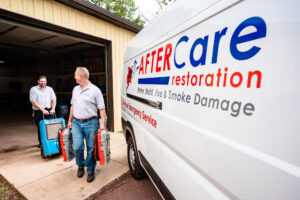
A household fan can move air across a surface, but it does not establish whether concealed materials are drying. A portable dehumidifier may help with routine basement humidity, yet a significant water loss can require greater moisture-removal capacity and a carefully planned drying approach.
Professional structural drying coordinates air movement, dehumidification, temperature, and access to affected materials. The equipment must suit the conditions, and its performance needs monitoring.
More fans do not automatically mean better results. Equipment placement and moisture measurements help determine whether drying is progressing.
If sewage, outdoor floodwater, or suspected mold is involved, avoid setting up fans yourself. The contamination must be evaluated before deciding how to clean and dry the space.
How Professional Structural Drying Works
At AfterCare Restoration, the drying process begins with an assessment of the affected areas and immediate restoration needs.
Depending on the conditions, the work may include:
- Inspecting the damage: Evaluating affected materials and investigating the likely source.
- Extracting accessible water: Removing standing water before continuing cleanup.
- Evaluating materials: Determining what can reasonably be cleaned and dried and what requires removal.
- Setting up drying equipment: Positioning professional dehumidifiers and air movers for the drying plan.
- Monitoring progress: Taking moisture measurements and adjusting equipment as conditions change.
- Checking drying goals: Evaluating whether materials have reached appropriate moisture levels before repairs proceed.
Thermal imaging can help identify temperature differences that deserve further investigation, but moisture measurements are needed to confirm suspected moisture.
Drying takes time, and the schedule depends on the materials, contamination, access, and extent of the loss.
Will Flooring or Drywall Need to Be Removed?
Not every wet material requires replacement. Some can be preserved when their condition, contamination level, and accessibility allow effective cleaning and drying.
Others may need removal because they are damaged, contaminated, or prevent access to wet areas underneath or behind them.
For example, removing affected baseboards or sections of drywall may provide access to a wall cavity. Saturated carpet padding or damaged flooring may also require removal, depending on the circumstances.
A restoration professional should explain the reason for each recommendation. Homeowners deserve to understand which work addresses existing damage, which work provides drying access, and what repairs will follow.
Fixing the Source Is Part of Recovery
Cleaning and drying the basement does not necessarily correct the problem that allowed water inside.
A failed sump pump may need a plumber’s attention. A leaking supply line needs repair. Recurring rainwater intrusion may require evaluation of drainage, grading, or foundation conditions.
Lansdale Borough’s stormwater guidance encourages homeowners to check sump pump, rainspout, and floor-drain connections. A qualified professional can help evaluate your property’s setup and applicable requirements.
Restoration and source correction should be coordinated so you understand what each contractor is addressing.
What Should Lansdale Homeowners Do First?
Keep people and pets away from affected areas when electrical hazards or contamination may be present. Never enter standing water to reach an electrical panel.
If a plumbing leak is responsible and the shutoff valve is safely accessible, turn off the water. Take photographs from a safe location and contact your insurance company about the loss.
Avoid covering damaged walls or installing replacement flooring before moisture conditions have been evaluated. Keep records of inspections, cleanup, and repairs.
 Basement Water Damage Cleanup in Lansdale, PA
AfterCare Restoration provides 24/7 emergency restoration services for homeowners and businesses in Lansdale and surrounding Montgomery County communities.
As a local, veteran-owned IICRC Certified Firm, we provide water extraction, structural drying, and reconstruction services, with clear explanations throughout the process.
If your basement recently flooded—or still has damp materials or musty odors after cleanup—call 215-515-1000. Our team can assess the affected areas, explain the recommended work, and help you take the next step toward restoring your home.
See Links Below To Learn More About Water & Flood Damage Restoration:
Why FAST Water Damage Restoration Matters
AfterCare & 5 Star Restoration Service
AfterCare IICRC Certified Firm
Click Below To Visit Our Emergency Service FAQ Page
FAQ – Emergency Restoration Experts
★★★★★ 130+ Five-Star Reviews by Homeowners
When water or fire damage disrupts your home or business, you need a restoration company that responds fast, communicates clearly, and delivers results you can trust. AfterCare Restoration is a local, veteran‑owned, IICRC Certified Firm serving Eastern Pennsylvania with industry‑leading expertise and a commitment to doing the job right the first time.
📍 Proudly Serving Eastern Pennsylvania
- Our local team serves homes and businesses across:
- Bucks County
- Chester County
- Delaware County
- Lehigh County
- Montgomery County
- Northampton County
We know Pennsylvania homes, building materials, and insurance processes — and we respond fast because we’re right here in your community.
📞 Call AfterCare Restoration 24/7: 215-515-1000
Veteran Owned • IICRC Certified • 1‑Hour Response • FREE Estimates